This video is supposed to be funny, but today it just seems a bit depressing for some reason. Maybe if there was an explosion involved or a bit of shrapnel-related head trauma? I have to admit, I DID laugh at the point in this video clip where the guy felt the impulse to explain that they weren’t actually setting fire to America itself, just a record with a SONG called “America”. Thanks, boys–glad we got that cleared up and squared away.
WTF Album Covers: Space Age Bachelor Pad Sexism
I’m sure Elliot Lawrence didn’t think he was a sexist pig when he saw the cover for his own album, Music For Trapping, sitting there in the shrink wrap. But it’s hard to imagine the era where this sort of nyuk-nyuk lunkhead imagery didn’t even raise an eyebrow even a LITTLE.
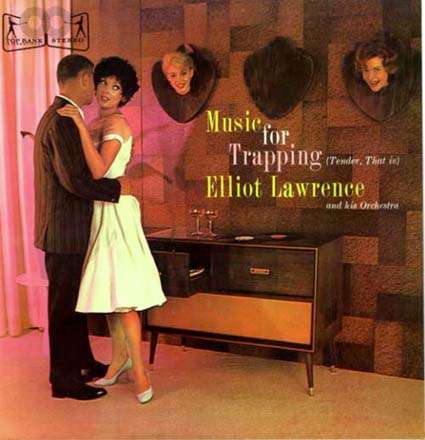
The trophy heads are SO Norman Bates…this guy definitely seems like a serial killer in the making. He’s one step away from an episode of Dexter, to be sure. If Dexter had a time machine and a martini shaker, that is.
By the way, if you like the Turntabling WTF album cover collection, why not join us on Facebook for regular updates of atrocious album covers, bad album art, and etc? We’d love to have you in this growing little community of bad album cover lovers.
Turntabling Reader Questions: How Do I Grade A Used Vinyl Record?
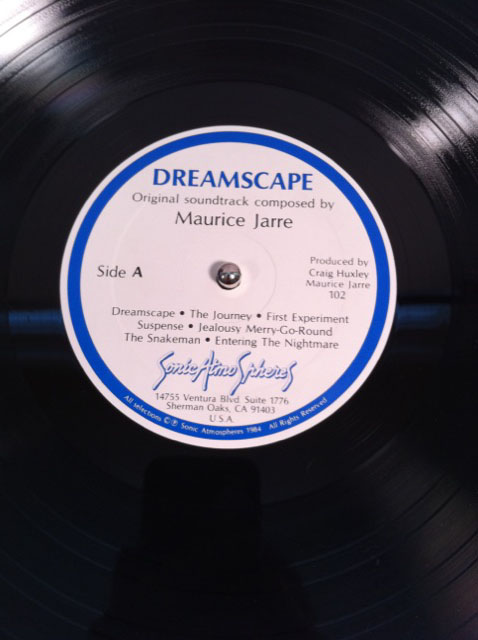 Turntabling gets plenty of questions about vinyl, record collecting, album titles, etc. A lot of them come when the Turntabling booth is set up at shows like Horrorhound Weekend, Cinema Wasteland, Capricon, etc. but from time to time the questions do come in by e-mail or the comments section.
One recent question had to do with grading vinyl records. How does a newcomer to record buying and selling accurately judge the quality of a record or get a good idea of the record album’s condition as described for sale on eBay, Discogs.com or Etsy?
An Introduction To Vinyl Grading
Many record sellers use the Goldmine standard or a variation of it. Basically, Goldmine standard grading runs from Good, Very Good, and variations of VG (Very Good Plus, VG++. etc.) to Near Mint, and Mint.
Grading applies separately to album covers and the vinyl records themselves–or at least it SHOULD.
Some use an alternative system of vinyl grades like “Clean” or “Exceptionally Clean”, but some of us in the vinyl collecting and selling community distrust such descriptions because they seem to be trying to hide something.That is obviously not true in every case but for some buyers it can be a red flag.
No matter–nobody forces you to buy vinyl without inspecting it and if you’re uncomfortable with a seller’s grading system, don’t buy unless you can inspect.
Mint condition records are generally those that have never been played or seem to have never been played. A conservative grader is your friend when it comes to buying records on line, and those who claim that a vinyl record is “Mint” are usually saying it’s never been played or played once.
That does NOT mean “still sealed” but obviously sealed records are in Mint condition unless there’s been poor storage and handling.
Rather than take the time to run down the entire list of possible record conditions and hope it’s been communicated properly (we WILL do that in another post, this is a GETTING STARTED guide) there is an easier way for you to begin learning what record grading is all about.
Find a record store that sells used vinyl and lists the condition of that vinyl on a label on the sleeve. Study what that record store considers to be a “Good” condition record. Records in Good condition are often anything but.
Now compare what that store considers to be in Near Mint condition. See the vast difference? Once you get an idea of what the extremes are–again, according to THAT STORE–have a look at the Very Good condition records and compare them with the Near Mints.
You may begin to notice less difference in some cases between Very Good or Very Good Plus and Near Mint.
That’s because every record grader, like it or not, has their own pet peeves. Some will decide one vinyl LP that is considered Near Mint by one grader is actually Very Good Plus album because of a certain type of scratch, nick, or other type of wear.
Conservative record album graders–the fussy ones, the people who don’t give away Near Mint status very easily–are your best friend when it’s time to buy online. Near Mint records are not always pristine and perfect, but Very Good records aren’t always scratchy or obviously worn, either.
What you’re after is a better idea of the range of tolerances in your own purchasing and/or selling habits.
What does Very Good or VG+ mean to you the buyer when you play the record? Do you care if the album is NM or NM-?
Some do and some do not. It’s all down to personal preference. In another blog post (several, I expect) we’ll tackle the more in-depth complexities in record grading. In the meantime, the more records you study yourself, the better you’ll get at determining condition and whether you’re personally comfortable buying an album in the specified condition.
Don’t forget that this is NOT an exact science and your preferences have much to do with how you interpret the grading system. I’ll be writing much more on this subject in the weeks to come.
–Joe Wallace
Jack White: Vinyl Junkie
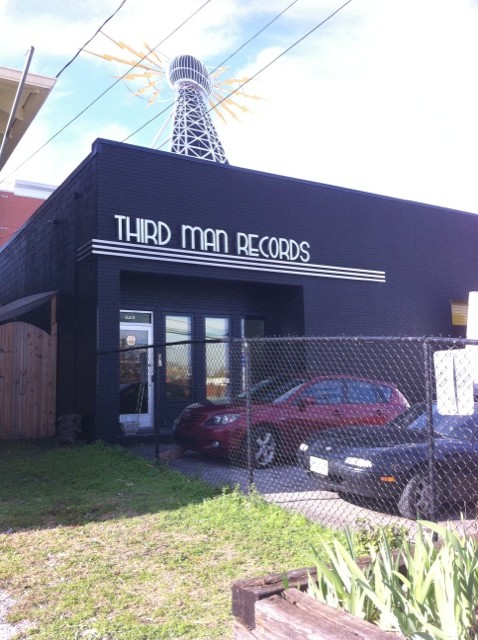 One of the stops on Vinyl Road Rage 4 in Nashville was the most excellent Third Man Records, the boutique record store and home of the record label of the same name.
Jack White started Third Man after his recording contract expired with V2. The White Stripes signed with Warner to record Icky Thump, but Jack White pulled off a shrewd deal to keep the rights to vinyl pressings…and Third Man wasn’t far behind with reissues of the back catalog, plus new releases by bands like The Dead Weather.
If you’re into learning about the entire saga of Third Man, have a look at this excellent interview with one of Third Man’s major players, as published by Collector’s Weekly. It’s a pretty interesting look behind the scenes at Nashville’s prime iconoclast labels/record stores.